This task Feminism:Elaine showater and Gayatri spivak given by Dilip Barad sir head of department of English Maharaja KrishnaKumarsinhji Bhavnagar University.
1)Spivak's concept of subaltern:-
2)Showlter and Gayatri spivak's views on feminism:-
Gayatri Chakravorty spivak
Gayatri spivak talks about the trajectory of the subaltern in her work. Gayatri Chakravorty spivak (born 24 February 1942) is an Indian literature theorist, philosopher and university professor at Columbia university, where she is a founding member of the school's institute for comparative literature and society.
"Can the subaltern speak"(1988)
Marginalised grouis have no "voice".
"My position is generally a reactive one. I am viewed by Marxists as too codic, by feminists as too male identified, by indigenous theorists as too committed to western theory. I am uneasily pleased about this."
Gayatri Chakravorty spivak is the translator of Jacques Derrida's De la Grammatologie. She introduced deconstructive critical strategies into cultural studies, especially feminism. Deconstruction underlines the inherent capacity of the language to suggest 'supplementary' or excess semantic associations.
This task given by Dr. Dilip Barad sir head of department of English Maharaj Krishnakumarsinhji Bhavnager University.
1)What is Culture ?
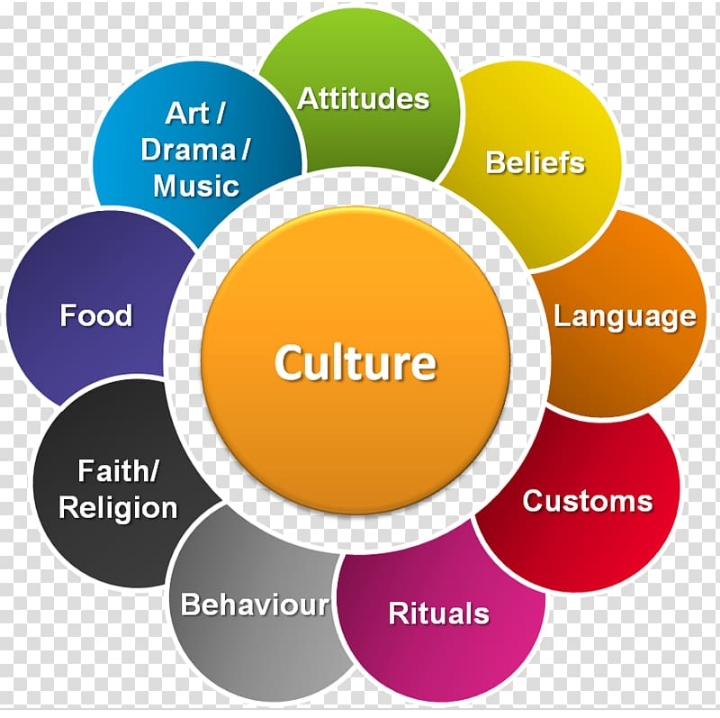
Culture is the total Culture way of life of particular group of people. It includes everything that a group of people thinks, says, does and makes it's systems, attitudes and feelings. Culture is learned and transmitted from generation to generation. Culture is the characteristics and knowledge of a particular group of people encompassing language, religion,cuisine, social habits,music and arts.
The word "Culture" derives from a French term, which in turn derives from the Latin " Colere" which means to tend to the earth and grow, or cultivation and nurture.
Culture according to people
The elements of Culture
There are five basics elements of Culture:-
Symbols
Language
Beliefs
Values
Norms
2) What is Culture study Cultural studies is the study of how a society creates and shares meaning.
Cultural studies is concerned with all those practices, institutions and systems of classification through which there are inculcated in a population particular values, beliefs, competetencies, routines of life and habitual forms of conduct.
3)Four goals of Cultural study Cultural studies appoaches generally share four goals. First:- Cultural studies transcend the confines of a particular discipline such as literary criticism or history.
Second:-Cultural studies is politically engaged.
Third:- Cultural studies denies the separation of "high" and "low" or elite and popular culture.
Forth:-Cultural studies analyzed not only the cultural work but also the means of production.
Definition:- 'power is the ability to make others do what you would have them do' Examples:- Family, workplace, Relationship.
First of all, let us understand 'Power'
This video help us understand when power comes from, how it is exercise and how can one read and power. • Six sources of civicpower
1)Physical force
2)wealth
3)State action
4)Social norms
5)Ideas
6) Numbers
• Three Laws of power
1)Power is never static
2)power is like water
3)Power compouns:-
•powerless
•power
-what we can do ? Read power and write about power.
-pro-Social and Anti-Social.
-power +character great citizen.
This blog Ecocriticism & Ecofeminism given by Dr. Dilip Barad sir head of department of English.
# Ecocriticism:-
Ecocriticism is a study of the relationship between literature and the physical environment.
Just as feminism criticism examines language and literature from a gender conscious perspective, and Marxist criticism brings an awareness of modes of production and economic class to it's reading of texts, eco-criticism takes an earth centered approach to literary studies.
# Ecofeminism:-
Ecofeminism theory asserts that a feminist perspective of ecology does not place woman in the dominant position of power but rather calls for an egalitarian, collaborative society in which there is no one dominant group Ecofeminism emphasizes that both women and nature must be respected.
This task given by Vaidehi ma'am Hariyani department of English Maharaja Krishnakumarsinhji Bhavnager University.
#Alfred Tennyson and Robert Browning:-
Tennyson is the poet of human nature in it's noble, common and loving forms, as Browning is the closest to what is complex, subtle and uncommon in human nature. Browning often renders the simple and the loving in human nature and such poem are among his among his masterpieces.
#Difference between Romantic era and Victorian era literary tedency :-
Romantic Poetry:-
- Romantic Poetry was produced during the reign of Queen Victoria.
-Romantic Poetry used themes such as of nature, pastoral life, medievalism, Hellenism, and supernaturalism.
-Romantic Poetry revered and admired nature.
-Romantic Poetry gave prominence to emotion, imagination and spontaneity.
Victorian poetry:-
-Victorian poetry was produced during the approximate period from1800 to 1850.
- Victorian poetry used medieval myths and legends as well as realistic issues such as the struggle between science and religion.
-Victorian poetry treated nature in more realistic and less idealized view.
-Victorian poetry gave more importance to intellectual and realism.
This task Thinking activity:Derrida & Deconstruction given by Dr. Dilip Barad sir Department of English Maharaj KrishnaKumarsinhji Bhavnagar University. #Jacques Derrida:-
"As soon as there is language, generality has entered the scen."
Jacques Derrida (1930-2004) was the founder of "Deconstruction" a way of criticizing not only both literary and philosophical texts also political institutions.
# What is Deconstruction?
-It is a radical approach to reading
-This literary criticism is not fully developed
-The founder of deconstruction is Jacques Derrida
-Explained as a strategy "Rules for reading, interpretation and writing".
-"A close and critical reading of a thinking that conceptualisation of the world".
Let's see Deconstruction example in advertisement:-
Stop crackers on Diwali (Advertisement by big Bazar) published on 6Jul 2016
In this advertisement the woman and her son go to a shop and ask their children to take fireworks when their mother does not give them any reason and at that time she calls the boy a man and turns a paper how to sound like this is very surprised and delighted that he teaches his friends everyone around him the same way on Diwali day.
This work given by Dr. Dilip Barad sir Department of English Maharaj KrishnaKumarsinhji Bhavnagar University.
This blog is the part of thinking activity on Structuralism. # What is Structuralism ?
Wundt was greatly emphasized on the study of components of consciousness, which is the supposed structure of our mind so, his approach to psychology is called as Structuralism .
Example:- An example of Structuralism is describing an apple. An apple is crisp, sweet, juicy, round and hard.
#What is the main concept of Structuralism?
In sociology, anthropology, and linguistics, Structuralism is the methodology that implies elements of human culture must be understood by way of their relationship to a broader, overarching system or structure. It works to uncover the structures that underlie all the things that humans do, think, perceive, and feel.
Differences:- Structuralism & Post Structuralism
# Structuralism:-
• It is Literary theory.
•It can be related it with text and make study of text.
•system of recurrent patterns or motifs.
•studied the underlying Structure.
# Post-structuralism:-
•post-structuralism is a response to Structuralism.
•The rejection of the self-sufficiency of the structures.
•Closely related to post-modernism.
•Argues that study of underlying Structure is reason of bias and misinterpretation.
•Study must be done on base of knowledge.
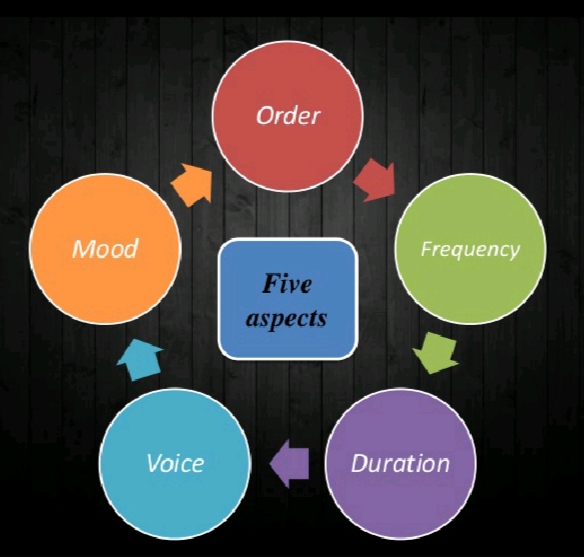
Generate also gave the concept of narratology. Mainly the five concepts were used by Generate in narrative discourse: An essay in method.
Duration:-
In see that to film, novel and serial in separation between at narration means there is discourse time and narrative time.
And find that to many serial came into time as past way and long time in discourse time, but a narrative to short time.
'Saath Nibhaana Sathiya' serial in narrated to story in only one week.
Voice:-
In novel, film and story in inside and outside in character narrated to story. In find that to narration of text from in..
Intra dietetic
Extra dietetic
Many of novel and film in narrator a character in the story
Hetero dietetic:-
Narrator is not a character in the story
E.g.Homer's 'The odyssey'
Mahabharata in 'samay'
Homo dietetic:-
Narrator is not a character in the story
E.g. 3idiots in 'Farhan'
Mood:-
Mood is depended on the 'Distance' and 'perspective' of the narrator, author and director.
This task given by Dr. Dilip Barad sir head of department of English Maharaj KrishnaKumarsinhji Bhavnagar University.
# Northrop Frye:-
In his native Canada. Northrop Frye's intellectual stature made him something of a national oracle and celebrity. In the world of literary theory and criticism, he was also a formidable and revered figure. Herman Northrop Frye was born in Sherbrooke, Quebec, received his B.A from the University of Toronto in 1933. Studied theology there at Emmanuel college, and was ordained a minister in 1936.He received an M.A. from Merton college, Oxford,in 1940.
In literary criticism the term archetype denotes recurrent narrative designs, patterns of action, character-types, themes, and images which are identifiable in a wide variety of works of literature."
# His Books:-
Fearful Symmetry (1947)
Fables of Identity (1963)
The Modern Century(1967)
The Stubborn Structure (1970)
The Secular Scripture(1976)
The Great Code(1982) etc.
1.What is Archetypal criticism ? What does the archetypal critic do ? Archer "first" and typos "form"
•An archetype means " Original form"
•It refers to the universal symbols, theme, characters and images we find repeated throughout literature.
Example:- In Native American literature, Coyote is an archetype of the trickster.
Archetype or Mythological critics look for underlying, recurrent patterns in literature.
According to Carl Jung, these patterns are embedded deep in the "collective unconscious" and involve "racial memories" of situations, events, relationship from time immemorial.
2.What is Frye trying prove by giving an analogy of 'Physics to Nature' and 'Criticism to Literature ?
1) Spring (Comedy):-
Here Fry connected Spring with Comedy because Spring and Comedy both are symbols of something because new, birth, development, revival and resurrection and also symbolise dark to light, dry to greenness..etc.
2) Summer (Romance):-
Here talked about season of England notIndian . So Summer season denotes romance because generally we can saw people marriage in summer time. Another things is that culminations to triumph both these term. All are symbolize romance through summer season.
3)Autumn(Tragedy):-
Autumn season denotes tragedy and it is symbol of dying life. We can saw in autumn all leaves of tree fallen down and also tree became lifeless. Similarly hero fallen down and protagonist became tragic hero.
4) Winter (Satire & Irony):-
Winter is season of Darkness. We can saw in winter season is very coldest and days are also shorter and night are longer. Satire reflects the darkness of literature, It is disillusioned and mocking from of literature.
This task given by Dr. Dilip Barad sir Department of English Maharaj Krishna kumarsinhji Bhavnagar University.
# Northrop Frye
•He was ordained to the ministry of the united church of Canada and studied at Oxford before returning to voft.
•One of the most recognized authors of literary criticism world -wide.
•Northrop Frye studied at both the university of Toronto and Oxford.
•Herman Northrop Frye was a Canadian literary critic and literary theorist, considered one of the most influential of the 20th century.Click here
# His Books:-
Fearful Symmetry (1947)
Fables of Identity (1963)
The Modern Century(1967)
The Stubborn Structure (1970)
The Secular Scripture(1976)
The Great Code(1982) etc.
#Archetype of Literature
The Fables of identity. Studies in poetic Mythology is a critical work published in 1963. The present essay, "Archetypes of literature", is taken from the book. In the essay Frye critically analyses literature against the backdrop of rituals and myths. He interprets literature in the light of various rituals and myths.
• Archetypes are universal symbol.
Certain concept are also archetypes.
Archetype are the residue of innumerable experiences of the same type undergone by the Mind.
Same experience when repeated over centuries of a wins leave a trace or mark on the human mind.
The solar cycle,seasonal cycle and life cycle are such repetitive phenomena.
The Comic vision and the Tragic vision a myth
Both art and religion are alike and they aim at perfection. Perfection is the end of all human and in religion it is through visualization. Perfection can be achieved in Literary Criticism also and it is the archetypal critic who does it through an analysis of the comic vision of life and the Tragic vision as well in a work.
Dharma to religion
We have inherited the term religion from the Judeo-Christian tradition and applied it indiscriminately to different Indian philosophies, myths, rituals, and practices. But there is really no one term for religion in India. There never has been. The term dharma does not mean religion. It simply means duty.
Religion can be thought of as a set of institutions, a set of ideas and beliefs, or a lived practice all of which have complex relations with each other, and all of which are affected by and in turn affect literature. As a critical approach, literature and religion asks how these impulses compete, coordinate,or otherwise inform one another and other practices and traditions.
Like literature, religion is also,at least in part, a human creation.... Therefore, literature cannot be subjected to any alien norm, be it God or religion. Great literature might have religious elements, or it might not. There is no necessary relationship between literature and religion.
The Four Phase of the Myth
Every myth has a central significance and the narrative in a myth centers on a figure that may be a good or demi-god or superhuman being or legend.
1. The dawn, spring and birth phase. There are myths dealing with the birth of a hero, this revival and resurrection, defeat of the powers of darkness and death. Subordinate characters such as the father and the mother are introduced in the Myth. Such myth are the archetypes of romance and of rhapsodic poetry.
2.The Zenith, Summer and marriage or triumph phase, In this phase, there are myths of apotheosis, of sacred marriage and of entering into paradise. Subordinate characters in these myths are the companion and the bride. Such myths are the archetypes of comedy, pastoral and idyll.
3. The sunset, autumn and death phase
These are the Myths dealing with the fall of a hero, a dying god, violent death, sacrifice and the hero's isolation. The subordinate characters are the traitor and the siren. Such myth are the archetypes of tragedy and elegy.
4. The darkness, winter and desolation phase. There are myths dealing with the triumph of these BN powers. The myth of floods, the return of chaos and the defeat of the hero are examples of this phase. The ogre and the witch are the subordinate characters here and these Myth are the archetypes of satire.
These are the four categories of myths, which Frye identifies and they recur in different types of works written by different writers. Indeed they constitute the bases of many great pieces of literature.
This task given by Dr. Dilip Barad sir Department of English MKBU
Richards in full lvor Armstrong Richards he was English critic,poet,and teacher who was highly influential in developing a new way of reading poetry that led to the New Criticism and that also influenced some forms of reader.
Techniques and principles I. A. Richards was a devoted supporter of a close textual and verbal study and analysis of a work of art. His approach is pragmatic and empirical. His work is a milestone in the history of literary criticism regarding verbal and textual analysis, interpretation and evaluation.He says a poet writes to communicate, and language is the means of that communication. Language is made of words, and hence a study of words is all important if we are to understand the meaning of work of art.
Words carry four kinds of meaning, or to be more precise,the total meaning of a word depends upon four factors, These are
-Sense
-Feelings
-Tone
-Intention
#Sense:- something that is communicated by the plain literal meanings of the words.
#Feelings:- When we say something, we have a feeling about it, " emotions, attitudes, will, desire, pleasure, unpleased and the rest". Words express "these feelings, these nuances of interest".
#Tone:-The writers attitude to his readers which is a relation between them. The writer chooses his words and arranges them keeping in mind the kind of readers likely to read his work.
#Intention:-It has an object, it is the writer's aim which may be conscious or unconscious, It refer to the emphasis, shapes the arrangement, or draws attention to something of importance.
# Works:-
The Meaning of Meaning -1923
Principles of Literary Criticism -1924
practical Criticism-1929
Science and Poetry
Coleridge on Imagination
Mencius of the Mind
The philosophy of Rhetoric
Speculative Instruments
# કવિતા:- મને મંજૂર છે
દૂધ નથી તો ચા મને મંજૂર છે,
આખી નથી તો પા મને મંજૂર છે.
એકવાર સાથે રમવા તો દો બાળકો,
નવી ગેડી નવો દાવ મને મંજૂર છે.
મિત્ર હોય કે શત્રુ, પીઠ પ્રહાર ના કરજે,
તારો સામી છાતીનો ઘા મને મંજૂર છે.
બચી શકે જો તું તારા એકાદ ગુન્હામાંથી,
તું નિઃસંકોચ મારા સમ ખાવા મને મંજૂર છે.
મળે જો તને 'સમય' કરતા સારું પાત્ર,
તું તારે રાજીખુશીથી જા મને મંજૂર છે.
- જગદીશ કરંગીયા
"દૂધ નથી તો ચા મને મંજૂર છે.
આખી નથી તો પા મને મંજૂર છે"
આ કવિતા માં કોઈ ભી વસ્તુઓ જોઈએ જ એવી માંગ નથી પરંતુ આ નથી તો પેલું ચાલશે બધીજ વસ્તુઓ ચાલશે અને અને રીતે બધીજ વસ્તુઓ નું મહત્વ બતાવવામાં આવ્યું છે.
# Song Lyrics
Aye Dil Laaya Hair Bahaar
Apni Ka Pyar Kya Kehna
Mile Hum Chhalak Utha
Khushi Ka Khumaar Kya Kehna
Khile Khile Chehron Se Aaj
Ghar Hai Mera Gule Gulzaar Kya Kehna Khile Khile Chehron Se Aaj
Ghar Hai Mera Gule Gulzaar Kya Kehna
Aye Dil Laaya Hai Bahaar
Apno Ka Pyar Kya Kehna
Mile Hum Chhalak Utha
Khushi Ka Khumaar Kya Kehna
Hum Tum Yoon Hi Milte Rahein
Mehfil Yoon Hi Sajti Rahe
Bas Pyaar Ki Yehi Ek Dhun
Har Subah Shaam Bajti Rahe
Gale Mein Mehekte Rahein
Pyaar Bhari Baahon Ke Haar Kya Kehna
Khile Khile Chehron Se Aaj
Ghar Hai Mera Gule Gulzaar Kya Kehna
Aye Dil Laaya Hai Bahaar
Apnon Ka Pyar Kya Kehna
Mile Hum Chhalak Utha
Khushi Ka Khumar Kya Kehna
Khile Khile Chehron Se Aaj
Ghar Hai Mera Gule Gulzaar Kya Kehna
Khile Khile Chehron Se Aaj
Ghar Hai Mera Gule Gulzaar Kya Kehna
Singer:- Kavita KrishnaKumarsinhji, Hariharan
Music Director:-Rajesh Roshan
Lyricist:-Majrooh Sultanpuri
Sing along with the lyrical video of 'Aye Dil Laaya Hai Bahaar' from the movie 'Krishnamurthy & Hariharan. Music composed by Rajesh Roshan.
Workshop on cultural studies by Dr. Kalyani Vallath
Hello Readers!
Welcome to my blog,
This blog on workshop on Cultural studies by Kalyani Vallath from Karal. As a study party of our syllabus and UGC NET, G-SIAT it's a very fruitful for us. Cultural Studies this task given by Dr. Dilip Barad sir It's organized at 27th December at departmentat of English Maharaj KrishnaKumarsinhji Bhavnagar University.
Cultural studies is an innovative interdisciplinary field of research and teaching that investigates the ways in which "culture" creates and transforms individual experience, everyday life, Social relations and power.
One day workshop on cultural studies by Dr. Kalyani Vallath from Karal.
Here in this workshop session it's fruitful to understand how can we see our as well as other cultural, of course Kalyani ma'am is very passionate and energetic throughout whole session, I like her teaching style is quite different and alive, pronunciation.
Cultural construction of Gender
The idea that gender characteristics are not inborn but rather constructed within each culture.
-All cultures recognize:-
-Two sexes:-
•Male
•Femle
Some cultures recognize a combined male/Female gender.
To say gender is 'constructed' is to say that masculine and feminine have different meanings (and associated behaviours) in different cultures.
Cultural studies is not necessarily about literature in the traditional sense or even about"art" in, their introduction to cultural studies, editors Lawrence Grossberg, Cary Nelson and Paula Treichler emphasizes that intellectual promise of cultural studies lies in its attempts to "cut across diverse social and political interests and address many of the struggles within the current scene".
This task given by Dr.Dilip Barad sir Department of English Maharaj Krishna Kumarsinhji Bhavnagar University.
Shashi Tharoor is an Indian politician,writer and a former career international diplomat who is currently serving as Member of Parliament, Lok Sabha from Thiruvananthapuram, Kerala, Since 2009.
The Victorian era was responsible for unimaginable atrocities in India. Indian MP Shashi Tharoor, author of Inglorious Empire: What the British did to India, demonstrates how British economised its industrial revolution through plundering India, reducing the country's share of the world economy from 23 percent to 4 percent.
Shashi Tharoor Oxford union
Shashi Tharoor and Dark Era of inglorious Empire
Inglorious Empire what the British did to Indian is a book by Shashi Tharoor, an Indian politician and diploma. It was published in India under the title An Era of Darkness: The British Empire in India.
He formerly served as Chairman of the Parliamentary Standing Committee on External Affairs (2014 to 2019) .
In 2019 Dr.Shashi Tharoor received the Sanity Academy Award for his book" An Era of Darkness" in a non-fiction category in English language.
#His famous works:-
"An Era Of Darkness"
"Why I Am a Indian"
"The great English novel"
"The glorious empire".
Shashi Tharoor wins Sahitya Akademi award 2019 for his book an era of Darkness: The British Empire in India on December 18,2019.
Indian politician, writer and congress party members Shashi Tharoor on the Sahitya Akademi award 2019 today. The member of parliament, Lok Sabha from Thiruvananthapuram won the prestigious award for his Empire in India. The book was published in 2016.
On December 18,2019 Sahitya Akademi Shared press release announcing it's annual Sahitya Akademi award in 23 languages. Shashi Tharoor was one of the winners non-fiction in English language.
The arguments presented by Shashi Tharoor are based in real research and facts, They are not concocted from hearsay talks or tea -stall gossips.
Listen to Dr. Shidhanshu Trivedi Even though he is doctorate degree holder in Mechanical engineering, all his arguments are based on hearsay talks and not based on hard facts. This speech is one of the best example of misplaced postcolonial argument. One should be proud of one's cultural identity. However, our perception of our culture shall be based on real life lived experience. The difference in Shashi Tharoor's highly academic post colonial argument and that of Dr. Shidhanshu Trivedi's fake rhetorics is very clear.
This task given by Dr. Heena ma'am Zala Department of English Maharaj Krishna kumarsinhji Bhavnagar University.
"It is not death that a man
Should fear, but he should
Fear never beginning to live".
-Marcus Aurelius
-Realist and Romantic poet
John Keats was born in London on 31 October 1795, the eldest of Thomas and Frances Jennings Keats's four children. Although he died at the age of twenty-five, Keats had perhaps the most remarkable career of any English poet. He published only fifty-four poems, in three slim volumes and a few magazines.
The nightingale described experiences a type of death but does not actually die. Instead, the songbird is capable of living through its song, which is a fate that humans cannot expect. The poem ends with an acceptance that pleasure cannot last and that death is an inevitable part of life.
Death poems:-
# "Death Be Not Proud"-John Donne
# "Because I Could Not Stop For Death"-Emily Dickinson
# Do Not Stand at My Grave and Weep-Mary Elizabeth Frye
Jonn Donne's view on this ultimate reality called "Death"
Here in this poem poet address to death saying that there is no need for death to be proud though some people call it very powerful and dangerous,it is neither powerful nor dangerous.
According to John Donne picture of death is nothing but sleep and rest.
Black Death
Shakespeare lived in the Elizabethan Era. The Bubonic Plague, a.k.a Black Death, was highly contagious. Shakespeare is said to have had a terrible fear of the deadly disease. This is hardly surprising as it touched so many areas of his life, including his life as an actor .